
Missing information?
Do you have any additional information you would like to share about a soldier?
Submit- Full
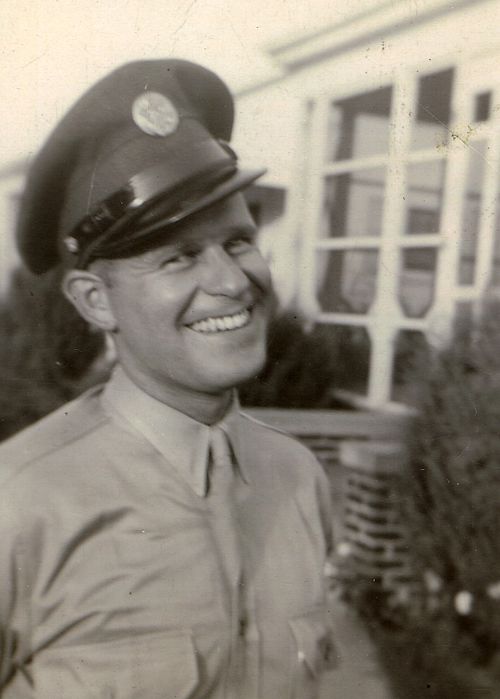
name
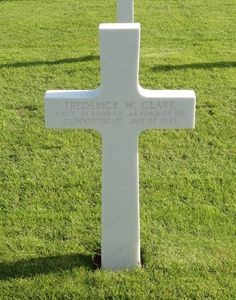
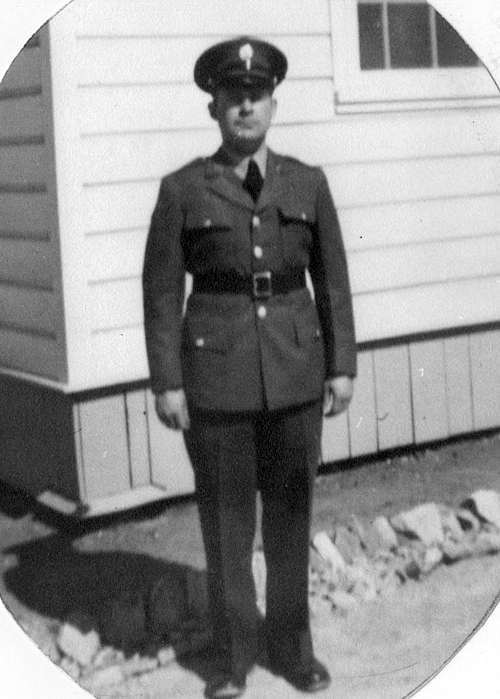
CLARK, Frederick Wilson - Date of
birth
4 January 1916 -
Age
27 -
Place of birth
Binghamton, Broome County, New York -
Hometown
New Haven County, Connecticut
Personal info
Military service
- Service
number
11033143 -
Rank
Staff Sergeant -
Function
Engineer -
Unit
68th Bombardment Squadron,
44th Bombardment Group, Heavy
-
Awards
Purple Heart,
Air Medal
Death
-
Status
Killed in Action - Date of
death
27 January 1943 - Place of
death
Terschelling Island, the Netherlands
Grave
-
Cemetery
American War Cemetery Margraten
| Plot | Row | Grave |
|---|---|---|
| B | 1 | 8 |
Immediate family
-
Members
Harry G. Clark (father)
Helen (Crowley) Clark (mother)
Richard A. Clark (brother)
Jean M. Clark (sister)
Helen F. Clark (sister)
Howard R. Clark (brother)
Marian Clark (sister)
Plane data
- Serial
number
41-23776 -
Data
Type: B-24D
Nickname: Spirit of '76
Destination: Willemshafen, Germany
Mission: Bombing of the submarine building yards
MACR: 15459
More information
S/Sgt Frederick W. Clark attended college and was a draftsman before he joined the Air Corps of the Regular Army in Hartford, Connecticut, on 18 September 1941.This was his 4th mission and the 10th mission of the Bomb Group. The destination was the submarine building yards at Willemshafen, Germany. But due to bad weather conditions, the squadron lost contact with the planes in front, and it was decided to drop the bombs on Lemmer, near the Zuider Zee (IJsselmeer), The Netherlands.
The aircraft left formation after bombs were released and was last seen to crash at 11:55 over Leeuwarden in the Netherlands. The aircraft was hit by a 20 mm cannon shell and exploded (according to the MACR). In other accounts of the crash, the plane was not shot down, but actually struck by a downed German aircraft.
From the 44th Bomb Group Roll of Honor and Casualties document (page 42), updated in 2005: "About 1205 hours, this aircraft was attacked by three FW 190s, boring in from ahead and above. One or more 20-mm shells hit #776 in a vital spot, and the bomber’s #3 engine broke into flames and the airplane dropped out of formation. Shortly thereafter, three men were seen to bail out, and then came an explosion, ripping it apart in midair. The rear fuselage and tail units fell into the Terschelling Harbor; the rest was scattered over the Noordsvaarder shallows and Terschelling beach. The lifeboat, “Brandaris” was able to save only one man, 2nd Lt Albert W. Glass. He was taken to Terschelling Harbor and a doctor was sent for immediately. Dr. Smit came a bit late due to a woman who was in childbirth, so it was necessary to amputate part of Lt Glass’ foot in order to save his life. Lt Glass was the only survivor from both of these 68th Squadron crews. Much later, he was repatriated back to the States. The other members, except Thomas W. Crook, who is Missing in Action, were killed by the crash. Lt Glass stated that when the plane exploded, he was blown clear and somehow his chute opened. Later, Glass was sent to POW camp (around July 1943) where Capt James O’Brien saw him. But the battle was not yet over. As the bombers were heading a bit more to the west, filling in the openings in the formation, a FW 190 dove down almost vertically upon Capt O’Brien’s aircraft, inflicting considerable damage to it, and hitting crew members as well.
S/Sgt Clark was killed on his sixth mission.
On one picture he poses (on the right) with his brother Howard and cousin Charlotte at Owasco Lake, New York, in the late 1920's.

Source of information: Raf Dyckmans, Peter Schouteten, Terry Hirsch, www.wwiimemorial.com, www.archives.gov, www.ancestry.com - 1930 census / United States World War II Army Enlistment Records, www.fold3.com - WWII Draft Registration Card, MACR, Hartford Courant - 11 October 1943
Photo source: www.findagrave.com, Robert Pleines